

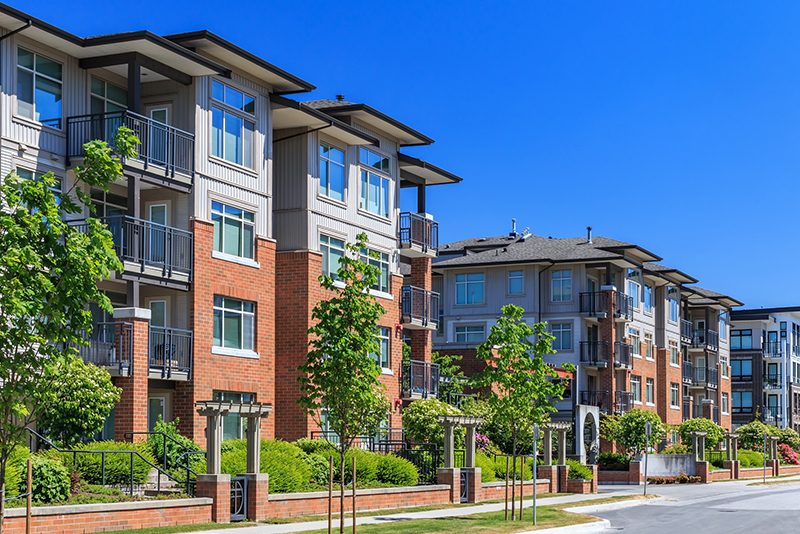
Real estate markets change. Interest rates rise and fall. New neighborhoods emerge while others mature. Through all those changes, multifamily housing has continued to attract investors seeking stable, long-term opportunities.
That does not mean every apartment building is automatically a good investment.
The strongest multifamily properties are not always the newest or the largest. They are often the ones that combine smart locations, sound operations, and long-term community demand. Successful investors know that finding a strong property is about much more than buying a building. It is about understanding why people want to live there and how that demand is likely to evolve over time.
Real estate investor Jeff Herter Rye, NH has spent more than fifteen years investing in and operating multifamily properties across the United States. His experience in finance and real estate has taught him that the best investments are rarely built on short-term excitement.
"I've walked away from deals that looked great on paper because something didn't feel right once I visited the property," Herter says. "One building had impressive financial numbers, but half the neighboring storefronts were vacant, and there was very little foot traffic. A year later, the market softened exactly where I expected it might. That experience reminded me that the neighborhood often tells you more than the spreadsheet."
Strong Communities Create Strong Investments
One of the biggest factors influencing a multifamily property's long-term performance is the strength of the surrounding community.
People choose neighborhoods for many reasons. They want access to jobs, schools, restaurants, parks, healthcare, and transportation. Communities that continue investing in these areas often become more attractive over time, supporting both occupancy and property values.
According to the National Multifamily Housing Council, the United States will need approximately 4.3 million additional apartment homes by 2035 to meet projected housing demand. That demand will not be spread evenly across the country. It will concentrate in communities where people want to live and work.
Herter believes investors should spend as much time evaluating neighborhoods as they do evaluating buildings.
"You can renovate apartments," he says. "It is much harder to change everything happening around the property. I always want to understand where the community is headed before I think about the building itself."
Employment Drives Long-Term Demand
A healthy local economy creates consistent housing demand.
Communities supported by diverse employers often remain more resilient during changing economic conditions. Healthcare, education, manufacturing, logistics, and professional services all contribute to stable employment opportunities.
The U.S. Bureau of Labor Statistics regularly reports that employment growth varies significantly between metropolitan areas. Even during periods of national uncertainty, some local markets continue expanding while others slow.
Herter looks beyond overall job numbers.
"I like asking simple questions," he says. "Are businesses hiring? Are people moving into the area because they want to stay, or because they're passing through? Those answers usually tell you a lot about long-term demand."
When employment remains healthy, multifamily properties often benefit from steady occupancy and lower turnover.
Operations Matter Just as Much as Acquisitions
Buying the right property is only the beginning.
Long-term performance depends heavily on how a property is managed.
Good maintenance, responsive communication, and thoughtful improvements all contribute to tenant satisfaction. When residents choose to renew their leases, owners spend less money on vacancy, repairs, and marketing.
"I've always believed that operations create value long after the purchase is complete," Herter says. "I've seen properties improve simply because management started responding faster to maintenance requests and paying attention to the small things tenants noticed every day."
Those improvements may not generate headlines, but they often produce stronger financial performance over time.
Location Is About More Than an Address
Everyone has heard the phrase "location, location, location," but location means more than a spot on a map.
The strongest locations continue improving over time.
New infrastructure, expanding businesses, better schools, and public investment often increase a neighborhood's appeal. Investors who understand these long-term trends are often better positioned than those focused only on current conditions.
Herter prefers spending time in the communities where he invests.
"I'll drive the area more than once," he says. "I'll visit during the week, on weekends, and at different times of day. You notice things that no report can tell you. You see whether restaurants are busy, whether families are using the parks, and whether businesses are investing in their buildings."
Those observations help create a more complete picture of a property's future potential.
Financial Discipline Still Matters
Even an excellent property can become a poor investment if it is purchased at the wrong price or financed improperly.
Herter's background in derivatives trading taught him the importance of understanding risk before chasing returns.
"I learned early that every investment should be evaluated from both directions," he says. "Everyone likes talking about what could go right. I always spend time asking what could go wrong first."
That conservative approach continues to shape his investment decisions.
Strong underwriting, realistic assumptions, and adequate cash reserves help investors navigate changing market conditions without making emotional decisions.
Actionable Ways to Evaluate a Multifamily Property
Investors considering a multifamily property should begin by studying the local market before focusing on the individual asset.
Research employment trends and population growth. Communities supported by multiple industries often experience steadier housing demand than markets dependent on one major employer.
Visit the property several times. Walk the neighborhood. Observe nearby businesses, traffic patterns, and public spaces. These visits often reveal opportunities or concerns that financial reports cannot capture.
Review operating expenses carefully. Strong properties are not simply those generating the highest income. They are often the ones that are managed efficiently, with consistent occupancy and reasonable operating costs.
Pay attention to tenant retention. High turnover can increase expenses and reduce long-term profitability. Properties with satisfied residents often perform more consistently over time.
Finally, avoid making decisions based solely on current market excitement. Long-term investments should continue making sense even if market conditions become more challenging.
Patience Creates Lasting Value
Real estate rarely rewards impatience.
Communities grow gradually. Properties improve through careful management. Equity often builds over years rather than months.
That is one reason multifamily investing continues attracting long-term investors.
"The best opportunities I've been involved with didn't become successful overnight," Herter says. "They improved because people stayed focused on making good decisions year after year instead of trying to force quick results."
That steady approach allows investors to benefit from changing neighborhoods, growing demand, and stronger operations over time.
Building for the Long Term
The strongest multifamily investments are built on more than attractive financial projections.
They begin with strong communities, healthy local economies, disciplined management, and thoughtful planning. They also require patience, because meaningful value often develops gradually rather than all at once.
While headlines may change from week to week, the qualities that define successful multifamily properties remain remarkably consistent. Investors who focus on long-term fundamentals rather than short-term market noise are often best positioned to build lasting success.
