

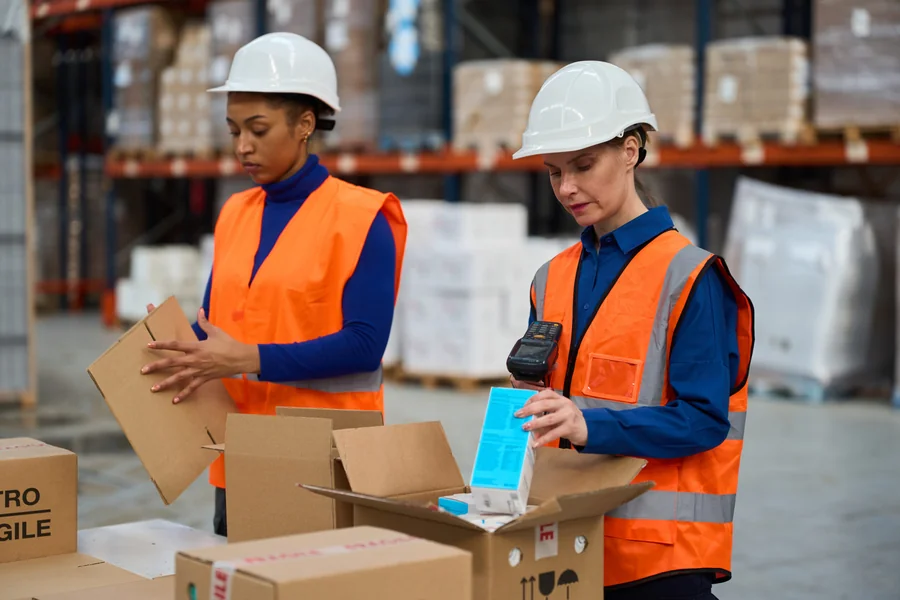
Placing an e-commerce order takes a customer a few clicks, nothing more. What happens next is where the real work sits: a process that kicks off the moment the order lands and doesn’t wrap up until the package is out the warehouse door.
That’s the job of a pick and pack fulfillment operation. Products get located, pulled, checked over, packed, and readied to ship, all inside one workflow. Order volumes climb, and it’s that consistency that keeps daily fulfillment from turning into chaos.
Step 1: Receiving the Customer Order
It starts the moment a customer places an order – through an online store, a marketplace, wherever.
Warehouse accuracy depends on that order information arriving clean: the team needs to know what to grab and where it’s headed. Multiply that across several sales platforms, and organized order data stops being optional.Ecommerce fulfillment services are what bridge incoming orders and warehouse operations. Once an order’s ready, it moves into the workflow.
Step 2: Picking the Right Products
Picking comes next. Warehouse staff track down what’s in each order and pull the right quantities.
Easy in theory. Harder once a brand’s carrying a lot of SKUs, product variations, or items that look nearly identical – that’s when an organized warehouse layout starts earning its keep, cutting down on wasted searching.
Clear SKU identification, consistent picking procedures – both lower the odds of grabbing the wrong item, and both let warehouse teams handle orders consistently no matter how daily volume swings.
Step 3: Verifying the Order
Picking only gets you halfway there. Before an order’s packed, the selected items get checked against what the customer actually ordered.
The team confirms product details and quantities first. More than one product in the order? Each item gets its own check.
Catching a mistake before the package leaves beats finding it after delivery, every time. That’s the whole point of a consistent verification step.
Step 4: Packing the Order
Verification done, it’s on to packing.
Not every product gets packed the same way. Some need protective materials, a specific box size, branded packaging, other special instructions.
Standardized packing procedures keep things consistent without forcing every product into the same treatment. Packing becomes part of the workflow this way, not some separate manual task bolted on at the end.
Step 5: Preparing the Shipment
Once packed, an order still has to get ready for the carrier.
Shipping info gets matched to the right package. Finished shipments enter the outbound process. Packages get sorted by their shipping requirements before they ever leave the warehouse.
All of this matters more once volume climbs into the hundreds or thousands of orders. 3PL warehouse services bring the infrastructure and procedures needed to keep that daily outbound activity running.
Supporting Shopify Orders
Shopify’s a major sales platform for plenty of e-commerce brands. Doesn’t change anything, though – an order placed there still runs through the same physical fulfillment process as any other.
Shopify fulfillment services connect the online store to warehouse operations. Order info flows straight into the fulfillment workflow: picked, verified, packed, prepped for shipment.
That gives brands a structured way to manage Shopify orders, no manual passing of every detail to the warehouse team required.
Handling TikTok Shop Orders
Social commerce brings its own kind of fulfillment challenge, because demand can shift fast.
One viral TikTok video. A creator campaign. A product that suddenly takes off. Any of it can spike orders overnight. TikTok shop fulfillment is built to absorb that kind of demand through an established warehouse process.
When order volume jumps unexpectedly, defined picking, packing, and shipping procedures let fulfillment teams handle the extra load without reinventing the process.
Managing Changing Order Volumes
E-commerce order volumes move. Promotions, product launches, seasonal shopping, a marketing campaign that hits – any of it shifts demand around.
A reliable fulfillment operation has to absorb those swings without losing accuracy. 3PL warehouse services give brands access to established processes and the capacity to handle workloads that don’t sit still.
Rather than building an internal fulfillment operation from scratch around every shift in volume, businesses can lean on a structured fulfillment partner to handle the physical work of getting orders shipped.
Why a Consistent Process Matters
Consistency is really what a dependable fulfillment operation comes down to. Every order takes the same path: received, picked, verified, packed, prepared for the carrier.
Repeatable workflows mean less confusion for warehouse teams, and fewer delays that didn’t need to happen.
Brands looking for warehouse fulfillment New Jersey will find that kind of operation brings the infrastructure and processes needed to manage customer orders efficiently.
Creating a Smoother Order-to-Shipment Process
Fulfillment happens behind the scenes, but it’s a critical piece of e-commerce. Every shipment that goes out right depends on several steps getting done, in order, without anything slipping.
Pick and pack fulfillment paired with organized warehouse support is what makes that kind of consistency possible, giving brands a dependable path from checkout to shipment as order requirements change.
