

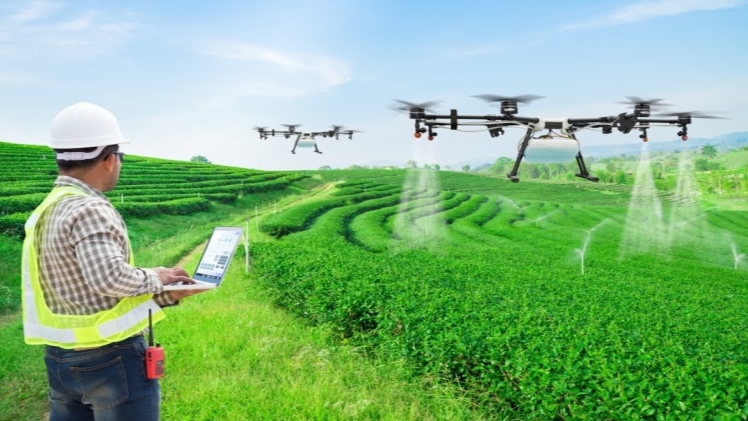
The demand for food is increasing due to population growth and changes in diet. At the same time, about 700 million people on the planet are starving. This type of production is difficult to keep at the level due to resource depletion. In addition, agriculture now faces a new challenge, as production will need to be increased by 2050 to feed about 9 billion people.
Different types of crops are suffering from various diseases, weeds, and pests. Fortunately, today’s technologies and practices, like soil solarization, help deal with these issues. However, there are more severe problems that also have to be solved.
Agriculture is a sector in which production is highly dependent on climate change. Fickle weather with more extreme events and increasing temperature leads to crop yields reducing.
At the same time, the agricultural sector significantly impacts the climate-changing process. It is a reason for massive greenhouse gas emissions (up to 29%). Many spheres of production today are trying to reduce emissions, and agriculture must strive for this. Otherwise, its percentage of participation in air pollution and temperature rise will increase. Moreover, it’s vital to solve the food waste problem, as nowadays 1/3 of produced food is wasted or lost. The practical solutions can help to decrease the impact on the environment and climate.
As you see, there are a lot of challenges in agriculture. However, modern concepts and approaches like Climate-smart agriculture can transform human activity and bring positive changes. CSA aims to solve the problems of food security and climate change. The main goals of this approach are emissions reduction, an improvement of productivity, and building resilience.
NRDC’s Climate Ready Soil report
The NRDC’s Climate Ready Soil report lists the potential impacts of climate change. The data of the report also relate to the sphere of agriculture. These consequences include increased demand for water as a result of higher temperatures and reduced rainfall. In other climates, it is also possible to increase soil erosion due to frequent and heavy rain. Loss of yield is also possible due to an increase in the number of pests and weeds.
Farmers have met the challenge of adaptation by diversifying their crops and incomes. It can be achieved by choosing plant and livestock species that are suitable for climatic conditions. In addition, farmers can change planting times and modify irrigation systems. However, the primary strategy in farm adaptation in soil care.
This fact is not surprising, since the state and development of the crop largely depend on the health of the soil. Healthy soil is rich in organic matter that supports crops at all stages. In addition, the ground in which all conditions for the habitation of various microorganisms have been preserved has a good texture. It also retains sufficient moisture for dry periods and is less susceptible to erosion due to healthy roots.
Several fundamental principles can be followed to improve soil health. First, it is necessary to reduce or completely get rid of soil cultivation. It is also recommended keeping the live roots in the soil to avoid erosion. Reducing the use of chemicals and growing cover crops is essential to maintaining healthy soil.
However, improving soil health is not all. Adapting to climate change is essential, but there is still a regenerative principle in agriculture. This principle presupposes a greater awareness of agricultural activities and their conduct in harmony with nature. This practice is also part of adaptation to climate change.
How Does Technology Help
In a changing climate, it isn’t easy to rely solely on traditional agricultural practices. To be more aware of potential events, you can use data as a basis for making decisions. These decisions can involve selecting and planting seeds, calculating the optimal harvest time, and more. With the data, you get a more predictable farm and the ability to plan more accurately.
Technology is making agriculture more predictable. Farmers can use a variety of tools to monitor soil, water, weather conditions, and more. All this helps to select the most suitable crops for your climate, as well as to care for them throughout all stages of growth. Keeping track of weather conditions that change with the climate is also quite important. Knowledge of rainfall and warnings of extreme events is beneficial in planning the cycles of growing.
The smart farming concept gives farmers the ability to control their farms. It is crucial to have this opportunity, especially when it comes to pests or diseases. Thanks to technology, you can timely respond to outbreaks of pests or diseases in certain areas and prevent them from spreading.
Technology is helping farmers become more informed, including through community building. Farmers can share experiences and warn of different threats through different platforms and applications. Building a large community of knowledgeable farmers will help better cope with climate change.
