

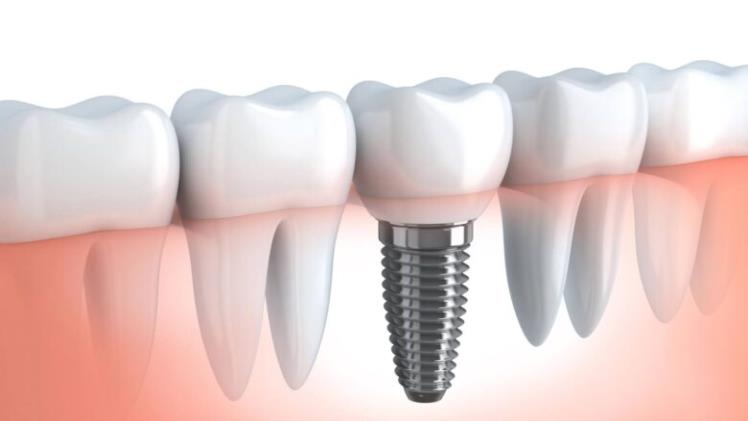
Dental Implants are metal frames or posts that are surgically placed into your jawbone below your gums. They can be mounted onto your dental office by your dentist once they are in place.
What are Dental Implants?
Implants fuse to your jawbone and provide support for artificial teeth. Implant-mounted bridges and dentures won’t shift or slip in your mouth, which is a major benefit for eating and speaking. The dentures and bridges, as well as individual crowns that are placed over implants, feel more natural than traditional bridges or dentures.
Some people find ordinary bridges and dentures uncomfortable or impossible to use due to sore spots or poor ridges, or gagging. Ordinary bridges should be attached to the teeth adjacent to the gap left by the missing tooth. Implants have the advantage that adjacent teeth do not need to be ground or prepared to support your new replacement tooth/teeth.
Implants can only be received if you have healthy gums. These structures must be maintained. Dental implants will only be successful if you practice good oral hygiene and make regular visits to your dentist.
Implants can be more costly than other options for tooth replacement.
Safety
The American Academy of Implant Dentistry estimates that approximately 3 million Americans have dental implants. This number is increasing by around 500,000 each year.
When performed by a dentist or qualified surgeon, dental implant surgery can be done safely. This is the only option for a dental restoration that preserves and stimulates the jawbone’s health.
Risks
Not everyone is eligible for dental implants surgery. Patients with these conditions are not suitable for dental surgery:
- Acute illness
- Uncontrollable metabolic diseases
- Infection or disease of the bone or soft tissues
These issues can be resolved before a patient can undergo the procedure.
- Heavy smoking habits
- Behavioral or psychiatric disorders
- HIV
- Diabetes
- Osteoporosis
- AIDS
Implant failure is more likely for people who have any of these conditions.
Patients undergoing these treatments may be referred to a dentist who will not perform surgery on them. This is due to the increased risk of implant complications.
- Bisphosphonate drug treatment of bone loss diseases
- Chemotherapy
- Radiation therapy for the neck or head
Implant surgery can have potential complications
This procedure can cause complications for patients who are undergoing it. These issues could include:
- Nerve damage can cause altered sensations in the area of surgery.
- After surgery, the incision is opened
- Movement of the implant
- Exposure of the implant over the gumline
How painful are dental implants?
The procedure is relatively painless for most people who have had dental implant surgery. Local anesthesia can also be used for the procedure. Patients report that implants are less painful than a dental extraction.
You can treat mild soreness with over-the-counter pain medication after the dental implant.
Infection of the implant:
Patients who feel the implant moving or exposed may need additional procedures to restore bone health or to remove the implant. These are signs and symptoms that indicate an unsuccessful implant placement:
- The implant is too mobile
- The site produces pus and other secretions.
- Tap the implant to feel pain
- Rapid, progressive bone loss
How long do dental implants last?
Implants can last between 10-20 years depending on where they are placed and how well the patient follows their oral hygiene routine. Implants placed at the back of your mouth are more likely to last longer because they are subject to greater stress and wear.
