

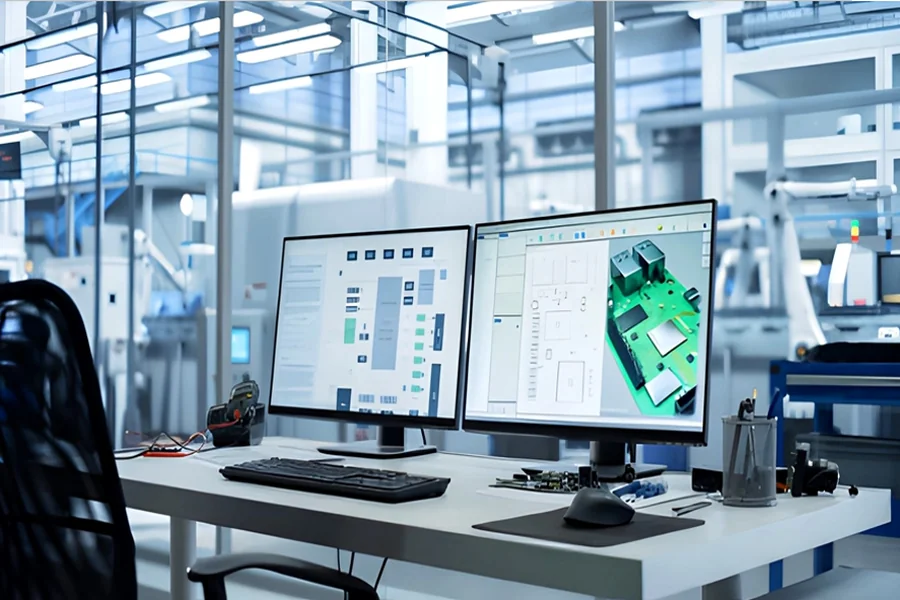
Rigid flex PCB assembly combines the durability of rigid printed circuit boards with the flexibility of flexible circuits, offering the best of both worlds. These hybrid boards consist of multiple rigid and flexible layers laminated together into a single structure. The flexible sections are designed to bend and fold, while the rigid areas provide mechanical support for mounting components.
This design makes rigid flex PCBs ideal for compact, high-density, and dynamic electronic devices where traditional rigid or flexible boards alone cannot perform effectively. From aerospace and military systems to medical equipment and consumer electronics, rigid flex PCB assembly has become a game-changer in advanced circuit design.
Structure and Function of Rigid Flex PCB Assembly
A rigid flex PCB assembly typically contains alternating layers of rigid FR-4 material and flexible polyimide film, connected through plated vias that allow electrical continuity across all layers. The flexible sections can be folded or twisted without damaging the circuit, enabling engineers to eliminate connectors and cables between different rigid sections.
This seamless electrical connection reduces the risk of connection failure, enhances signal integrity, and makes the entire assembly lighter and more compact. Because of these benefits, rigid flex PCBs are widely used in applications that require reliability, precision, and miniaturization.
Advantages of Rigid Flex PCB Assembly
The growing popularity of rigid flex PCB assembly is due to its remarkable combination of flexibility, strength, and performance.
-
Compact Design and Space Efficiency
Rigid flex PCBs allow for three-dimensional configurations, enabling more components to fit into smaller spaces. The flexible sections make it possible to fold the board into the required shape without needing external wiring.
-
Improved Reliability and Durability
By eliminating connectors, cables, and solder joints between rigid boards, the risk of mechanical failure and signal loss is significantly reduced. This makes rigid flex assemblies perfect for harsh environments and devices exposed to continuous motion or vibration.
-
Lightweight Construction
Since these boards require fewer interconnects and mechanical parts, the overall weight of the electronic system is reduced — a major advantage in aerospace, wearable, and medical applications.
-
Enhanced Signal Quality
The shorter interconnections and reduced interference paths lead to improved electrical performance and signal integrity, especially for high-speed or high-frequency applications.
-
Simplified Assembly and Maintenance
With fewer components and interconnections, rigid flex assemblies reduce overall assembly time, simplify installation, and lower maintenance costs during the product’s lifecycle.
Applications of Rigid Flex PCB Assembly
Rigid flex PCB assembly is highly versatile and finds applications across industries that demand compactness and durability.
Aerospace and Defense
Used in satellites, communication systems, and navigation devices where high reliability and vibration resistance are critical.
Medical Devices
Applied in pacemakers, imaging systems, and portable diagnostic tools where space-saving and reliability are essential.
Automotive Electronics
Used in sensors, infotainment systems, and advanced driver-assistance systems (ADAS) requiring precision and robustness.
Consumer Electronics
Ideal for smartphones, cameras, laptops, and wearable devices where slim and lightweight designs are key.
Industrial Equipment
Used in control systems and robotics for consistent performance in demanding environments.
The Process of Rigid Flex PCB Assembly
Creating a rigid flex PCB assembly involves specialized steps to ensure high performance and durability.
-
Design and Layout Preparation
Engineers carefully plan the rigid and flexible zones based on the product’s mechanical and electrical requirements. The bending areas must be precisely designed to avoid stress fractures.
-
Material Selection
High-quality materials such as polyimide for flexible layers and FR-4 for rigid layers are used. The right choice ensures thermal stability, flexibility, and electrical performance.
-
Fabrication
The rigid and flexible layers are laminated together through controlled heat and pressure. Vias are drilled and plated to connect the layers electrically.
-
Component Placement and Soldering
Automated pick-and-place machines mount surface-mount and through-hole components on the rigid sections. Reflow or wave soldering methods are applied depending on the component type.
-
Inspection and Testing
After assembly, the board undergoes AOI (Automated Optical Inspection), X-ray, and functional testing to ensure all connections are secure and that the board performs as intended.
Challenges in Rigid Flex PCB Assembly
While rigid flex PCB assembly offers numerous advantages, it also presents unique challenges:
- Complex Design Requirements: Designing flexible and rigid areas with correct bend radii and layer transitions requires expert knowledge.
- Higher Manufacturing Costs: Due to the materials and precision required, rigid flex PCBs are more expensive than standard rigid or flexible boards.
- Tight Tolerances: The multi-layer structure requires precise alignment and accurate lamination to prevent defects.
However, these challenges can be effectively managed by working with an experienced manufacturer that specializes in rigid flex technologies.
Future Trends in Rigid Flex PCB Assembly
As electronic devices continue to shrink while becoming more powerful, rigid flex PCB assembly will play an even greater role in next-generation technologies. The rise of wearable medical devices, electric vehicles, and high-speed data systems is driving demand for boards that can combine mechanical flexibility with superior electrical performance. Manufacturers are also adopting automation, AI-based inspection, and 3D design tools to enhance precision and reduce turnaround times.
Final Thoughts: Partner with a Reliable China One-Stop PCB Assembly Service
For companies seeking high-quality rigid flex PCB assembly, working with a trusted manufacturing partner ensures superior quality, efficiency, and innovation. Choosing a China one-stop PCB assembly service gives you access to advanced fabrication capabilities, competitive pricing, and end-to-end support—from design consultation and prototyping to full production. With the right partner, you can ensure that your rigid flex PCBs meet the highest standards of reliability and performance for even the most demanding applications.
