

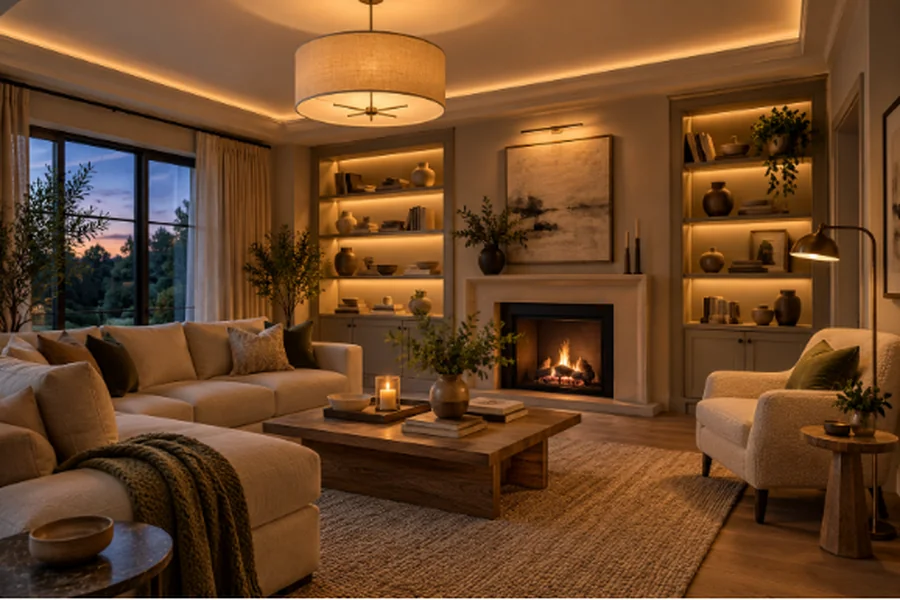
The most welcoming rooms are rarely defined by a single spectacular lamp. Their appeal comes from a considered mix of light sources that support everyday activities, reveal texture and create a sense of depth. Layered lighting is the method interior designers use to achieve that balance. Rather than asking one ceiling fitting to do everything, it gives each source a clear purpose. For inspiration across pendants, wall lights and decorative fittings, Lighting Concepts provides a useful starting point for comparing styles and considering how different fixtures can work together. The key is to choose them as part of a coordinated scheme, not as isolated purchases.
Why layered lighting makes a room feel better
Light affects far more than visibility. It changes how generously a space appears, which architectural details attract attention and whether a room feels energising or restful. A bright overhead light may make cleaning easy, yet feel stark during an evening conversation. A shaded lamp can be wonderfully relaxing, but inadequate for reading. Layering resolves this tension by placing the right type of light where it is needed.
It also makes interiors more flexible. A living room can accommodate homework, entertaining and a quiet film night without changing its furniture. Different combinations of fittings, preferably on separate switches or dimmers, allow the lighting to adapt with the activity and the time of day. That adaptability is particularly valuable in open-plan homes, where several functions share one continuous space.
Understand the three essential layers
Ambient lighting: the foundation
Ambient light provides the general level of illumination needed to move comfortably through a room. Ceiling pendants, flush-mounted fittings, recessed downlights and indirect ceiling lighting can all serve this purpose. Evenness matters more than maximum brightness. Avoid relying on a dense grid of downlights where a combination of soft ceiling light and reflected illumination would feel more natural.
Task lighting: precision where it matters
Task lighting supports specific activities. Examples include an adjustable reading lamp, a pendant over a kitchen island, a desk light or under-cabinet illumination above a worktop. The source should reach the working surface without casting troublesome shadows or shining directly into the eyes. Its positioning is often more important than the wattage of the bulb.
Accent lighting: atmosphere and visual depth
Accent light draws attention to features that give a room its identity: artwork, shelving, textured walls, plants or architectural niches. Picture lights, carefully aimed spots and discreet linear LEDs can provide this final layer. Used selectively, accents prevent a room from looking flat. Too many, however, compete for attention and weaken the visual hierarchy.
Plan the lighting around how each room is used
Living rooms: make flexibility the priority
Start with a gentle ambient source, then introduce a table or floor lamp beside each main seating area. A directional reading light beside an armchair can be brighter than the surrounding lamps without making the entire room feel harsh. Accent light on shelves or artwork gives the eye somewhere to rest. If the television is used frequently, modest background illumination can soften the contrast between the screen and a dark room.
Kitchens and dining areas: combine clarity with warmth
Kitchen worktops require clear, shadow-controlled task lighting, especially around preparation zones. Under-cabinet strips are often more effective than relying solely on ceiling fittings placed behind the person cooking. Above a dining table, a pendant can establish a visual centre, but it should illuminate faces and the tabletop without obstructing sightlines. A dimmer helps a dining space move naturally from family meals to relaxed evening gatherings.
Bedrooms and home offices: support different routines
Bedrooms benefit from soft general illumination and independently controlled bedside lights. Wall-mounted reading fittings can free up space on small nightstands, while a low-glare lamp near a dressing area makes the room more practical. In a home office, aim for balanced ambient light and a movable task lamp that suits the desk layout. Light should be positioned to minimise reflections on monitors, not simply directed at the centre of the room.
Choose colour temperature, brightness and controls carefully
Bulbs that look similar when switched off can produce dramatically different light. Colour temperature, measured in kelvin (K), describes whether white light appears warm or cool. For many living rooms and bedrooms, approximately 2700–3000 K creates a comfortable evening atmosphere. Kitchens and workspaces sometimes benefit from a more neutral appearance, depending on daylight, finishes and personal preference. Consistency is important: mixing very warm and noticeably cool bulbs within one sightline can make a scheme look disjointed.
Brightness is expressed in lumens, not watts. The amount required depends on room size, surface reflectance, age-related visual needs and the task itself. Rather than searching for one universal lumen figure, test the light where it will be used and distribute output across several fittings. Where colour accuracy matters, for example near artwork, textiles or food preparation areas, consider bulbs with a high colour rendering index (CRI), ideally 90 or above.
Controls deserve attention early in the design. Separate circuits for ambient, task and accent lighting make a room easier to use. Compatible dimmable LED lamps and dimmers offer further range, while carefully configured smart scenes can simplify repeated routines. Always confirm that the bulb, fitting and control system are compatible before purchase or installation.
Get proportions, materials and glare right
The appearance of a fitting should suit the scale of the room and the furniture beneath it. A very small pendant can disappear over a broad dining table, while an oversized design may dominate a compact space. Consider its width, suspension height and the view from both seated and standing positions. In circulation areas, maintain safe head clearance and seek professional advice where installation conditions are unusual.
Materials shape the light as much as they shape the style. Opal glass diffuses the source, clear glass can emphasise a decorative bulb, and metal shades tend to direct the beam more strongly. The effect varies with the design, so assess the actual light distribution rather than choosing by appearance alone. For a closer look at materials and styling considerations, the site’s guide to glass pendant lighting offers a useful related read.
Glare is a frequent reason that expensive lighting feels uncomfortable. Visible high-intensity bulbs, reflections in glossy surfaces and poorly aimed spots can all undermine an otherwise elegant room. Look for shaded or diffused sources at eye level, carefully positioned directional fittings and adequate separation between the light source and reflective surfaces.
Common lighting mistakes worth avoiding
Most disappointing schemes have less to do with the price of the fixtures than with how the lighting is planned. A short check before buying can prevent common problems:
- Using only one central ceiling light, which often leaves corners underlit and removes flexibility.
- Choosing a striking fitting without checking how it distributes light or whether it causes glare.
- Ignoring controls, leaving every light on the same switch and limiting the room to one mood.
- Buying bulbs with inconsistent colour temperatures, creating an uneven visual effect.
It is often useful to create a simple room plan showing the furniture, key activities, natural-light sources and desired focal points. From there, assign ambient, task and accent lighting, then check the positions of switches and sockets. This modest amount of preparation can prevent costly changes once decoration is complete.
Build a lighting scheme that lasts
Successful layered lighting is not about filling a room with fittings. It is about creating a small, purposeful family of light sources that can be used independently or together. Begin with the tasks that must be comfortable, add general illumination that feels balanced, and finish with a few well-chosen highlights. Then assess the result after dark, when the scheme is doing most of its work.
A thoughtful lighting plan makes a home easier to live in and more satisfying to look at. With appropriate brightness, consistent colour, considered scale and flexible controls, the same room can feel clear and productive in the morning, welcoming at dinner and restful late in the evening. That is the real value of layered lighting: light that adapts to life, rather than forcing life to adapt to the light.
